
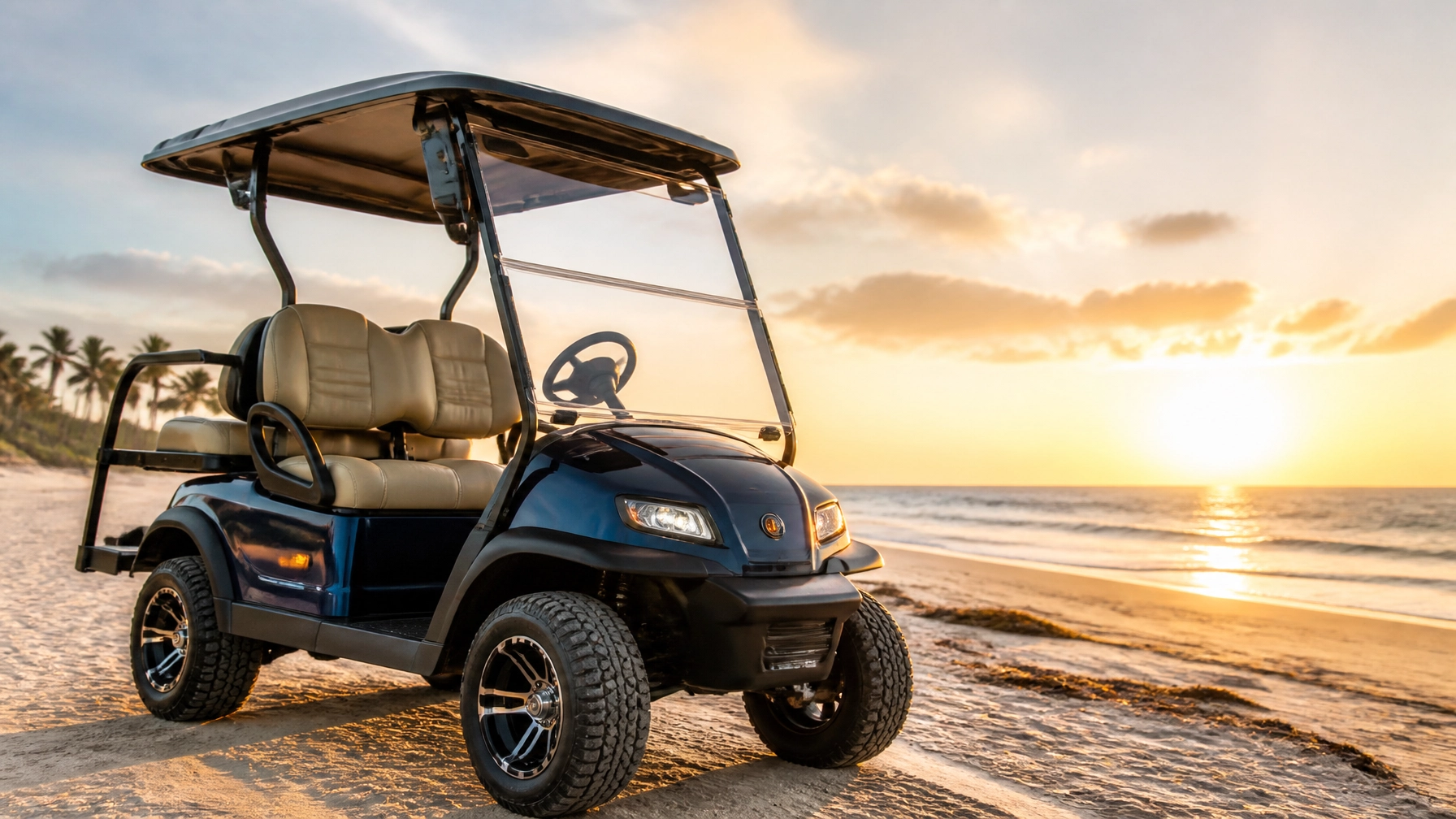
Drawing on decades of local knowledge, we’ve helped people choose, customize, maintain, and enjoy golf carts built for real-world use. That kind of experience matters, especially when you’re shopping for a beach buggie. Coastal driving is fun, but it is also tough on your ride. Salt, sand, humidity, and sun can wear down the wrong cart in a hurry.
The good news is that a beach-ready cart can absolutely handle the lifestyle when you choose the right setup. The key is knowing what materials, power options, upgrades, and maintenance habits make the biggest difference.
If you’re dreaming about easy coastal cruising, this guide will walk you through the practical side and the fun side of owning the right beach buggie.
The Frame Game: Aluminum vs. Steel
If you remember one thing from this guide, let it be this: Salt water and steel are not friends. In fact, they are mortal enemies. When you take a traditional steel-framed golf cart to the beach, you are essentially putting a "Best By" date on your vehicle.
The Steel Struggle
Most standard carts come with a steel frame. That is not automatically a problem for neighborhood or course use. At the beach, though, steel has a much harder life. Salt spray speeds up corrosion. Sand traps moisture. Humid air keeps everything working against you. What starts as a little surface rust can turn into bubbling paint, weakened hardware, and bigger repair bills over time.
The Aluminum Advantage
For coastal use, an aluminum frame is one of the smartest choices you can make. Aluminum resists rust far better than steel, which makes it a strong fit for beach homes, marina areas, and shoreline cruising. It is also lighter, which can help when you’re driving over softer terrain.

If the beach is your main destination, frame material should be near the top of your checklist. A durable frame gives you more confidence, more longevity, and a lot less worry every time the salt air rolls in.
Powering the Party: Gas vs. Electric
The "Gas vs. Electric" debate is as old as the golf cart industry itself. For a beach buggie, the choice often comes down to how you plan to use it and how much maintenance you’re willing to do.
The Case for Electric
Modern electric carts are a long way from the slow, sleepy models people remember from years ago. With newer battery technology, especially lithium, they have become strong, capable, and very well-suited for beach use.
Pros:
- Quiet: You can actually hear the waves and hold a conversation without a combustion engine roaring under your seat.
- Torque: Electric motors provide instant torque, which is exactly what you need to pull through deep, soft sand.
- Zero Emissions: Keep the beach air smelling like sea salt, not exhaust.
- Low Maintenance: No oil changes or spark plugs to worry about.
Cons:
- Range Anxiety: If you’re planning on a 20-mile trek down the coast, you need to keep an eye on your battery levels.

The Case for Gas
Gas carts still make sense for some beach owners. If you are farther off the grid, do not have convenient charging access, or plan to cover longer distances regularly, gas can be a practical option.
Pros:
- Infinite Range: As long as you have a gas can, you’re good to go.
- Easier for "Off-Grid" Use: Ideal if you're parking the cart in a remote area without electricity.
Cons:
- Noise and Heat: They run hotter and louder, which can be a bit much on a 95-degree Texas summer day.
- Corrosion Risk: Salt air loves to clog up carburetors and corrode fuel lines if they aren't properly maintained.
Customizing for the Coast: Making It Your Own
A stock cart may be enough for light neighborhood use, but beach driving usually calls for a few smart upgrades. Coastal cruising should feel easy and fun, and the right setup helps protect your cart while making every ride more comfortable.
1. The Lift Kit and Tires
You cannot take low-profile street tires onto soft sand unless you enjoy the hobby of "digging your cart out with a shovel." A 4-inch to 6-inch lift kit paired with wide, aggressive sand tires is non-negotiable. This gives you the ground clearance to navigate ruts and the "flotation" needed to stay on top of the sand rather than sinking into it.
2. High-Quality Lighting
The beach doesn't have streetlights. If you’re planning a sunset cruise or a late-night bonfire, you need a high-lumen LED light bar. Not only does it look cool, but it’s a vital safety feature for spotting driftwood or tide pools in the dark.
3. Protection and Storage
Think about adding a brush guard to protect your bodywork and a heavy-duty roof to shield you from the Texas sun. Since you’re likely hauling boards, towels, and snacks, a rear flip-seat that converts into a cargo bed is a game-changer.

Essential Golf Cart Maintenance Tips for the Beach
Owning a beach buggie is a lot of fun, but coastal use does come with extra maintenance. The good news is that a few simple habits go a long way.
- Rinse with fresh water after every beach trip: This is the big one. Spray down the undercarriage, suspension, wheels, and brakes to remove salt and sand before they have time to settle in.
- Check battery connections regularly: Salt air speeds up corrosion. If you have lead-acid batteries, keep terminals clean. If you have lithium, maintenance is easier, but connections still need attention.
- Keep moving parts lubricated: Steering components, suspension points, and bushings all benefit from proper lubrication. Sand is abrasive, and it causes wear when it gets into the wrong places.
- Protect the exterior finish: Wax or a ceramic coating helps defend against blowing sand, sun exposure, and that constant coastal grime.

Final Thoughts: Ready to Hit the Sand?
The best beach buggie balances durability with enjoyment. It needs to stand up to salt, sand, sun, and moisture. It should also make every coastal ride feel easy, relaxed, and fun. That is the sweet spot.
If you focus on the right frame, the right power source, the right tires, and a solid maintenance routine, you will be in a much better position to enjoy the lifestyle without fighting constant repairs. A beach cart should help you carry the cooler, chase the sunset, and make the trip part of the fun.
With the right setup and the right support, coastal cruising can stay simple for years to come.